My take on The Economic Singularity
If you want to choose what to eat and where to go in the future, you have to get rich. Fast.
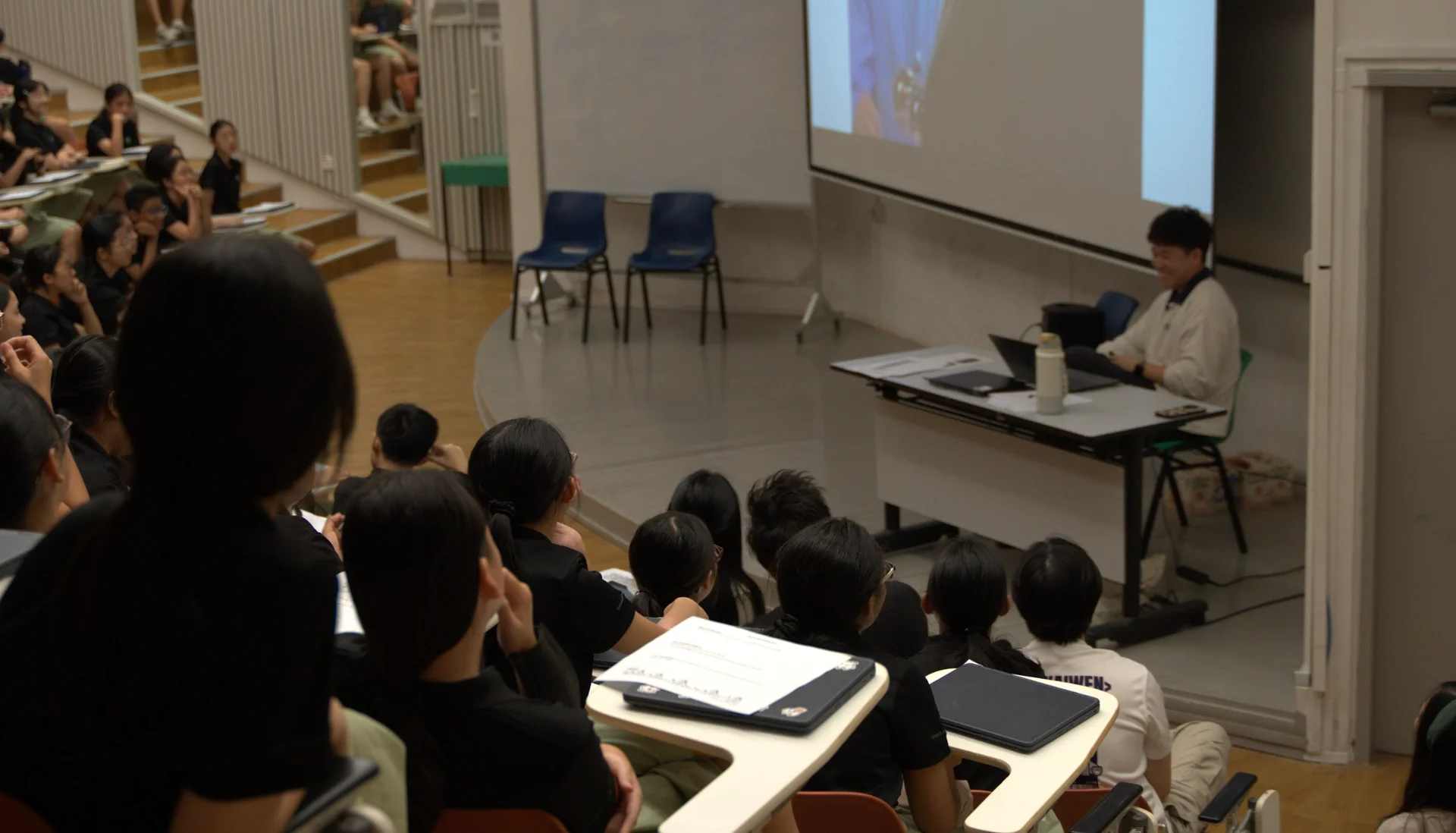
A presentation at my old school
A teacher asked the standing students a series of questions. You only sat down if your answer was yes.
“Sit if you don’t use AI every day.”
Some sit.
“Sit if you don’t use more than one type of AI.”
Some more sit.
“Sit if you don’t think your job is going to be taken over by AI in the future.”
Almost everyone sits. Including the two speakers beside me.
I remain standing, with one other IP1 student. A 13-year-old.
An introduction to the singularity
In physics, a singularity is where our current theories stop making sense. NASA explains it here.
Think of dividing by zero in maths. The result is undefined.
At a singularity, equations can give us infinities that stop making sense.
Infinity + 1. Infinity − 8. Still infinity.
So how do we predict what comes next?
And what does this have to do with the economics of the working world?
Very simply: every company wants to remain competitive.
Every individual wants to remain competitive too. To make sure they are attractive hires.
Now, imagine productivity and efficiency tending towards infinity. And the value of labour tending towards zero.
Not literally infinity. But if AI could do almost every job more cheaply than us, where would that leave us?
What would work look like in the future, then?
To me, AI is not even the cause of things. It’s just a catalyst for the singularity.
I feel humans were always meant to develop some form of artificial intelligence. To make knowledge more accessible to all.
More on the skills I feel are most important in the AI era in my upcoming article: “Value Add, or Subtract?”
Theories on how the future of work will look
Universal Basic Income (UBI)
Everyone gets a regular payment. Whether you work or not. Whether you earn a lot or a little.
The idea is to help cover basic needs. How much it covers depends on how much you get. Someone still has to fund it.
Universal Basic Capital (UBC)
Everyone gets a share of things that can create wealth. Think shares in companies, or a fund that owns them.
You own a small part. So you can benefit from the money it makes. But its value can go down too.
My take
The rich will always, always find a way to REMAIN rich.
I think the rich will be able to live off their capital. And the social ladder will be really challenging, if not almost impossible, to climb.
I think there will be some form of minimum allowance. Something like government subsidies to help people cover their basic needs.
But enough to get by? Or enough to choose what to eat and where to go?
I think it would be a mix of both UBI and UBC. Some money to live on. And some ownership of the things making money.
Whether that will be enough to move up the ladder is another question.
My optimistic take
It will take time for people to fully adopt AI.
That gives us a lot of good opportunities to move and build fast. And ship excellent products today.
But I don’t think this opportunity will last forever. We need to take advantage of it quickly.
I haven’t made anything that I am extremely satisfied with yet. But I’m pushing towards that every day.